

Introduction
Many people wonder why small foot injuries become serious in diabetic patients. Even a tiny cut or blister can turn into a big problem for someone with diabetes. Because diabetes affects how the body heals, foot care is very important. In this blog, you will learn why minor foot injuries are risky, what signs to watch for, and how to protect your feet. Understanding these facts can help prevent serious complications and keep your feet healthy.
What Happens to the Feet in Diabetes?
Diabetes can cause changes in your feet. For example, high blood sugar can damage nerves. This is called diabetic neuropathy. As a result, you may not feel pain, heat, or cold in your feet. In addition, diabetes can reduce blood flow to your feet. Poor blood flow means cuts and sores heal slowly. Because of these changes, even small injuries can go unnoticed and get worse over time.
Why Minor Foot Injuries Are Risky for Diabetic Patients
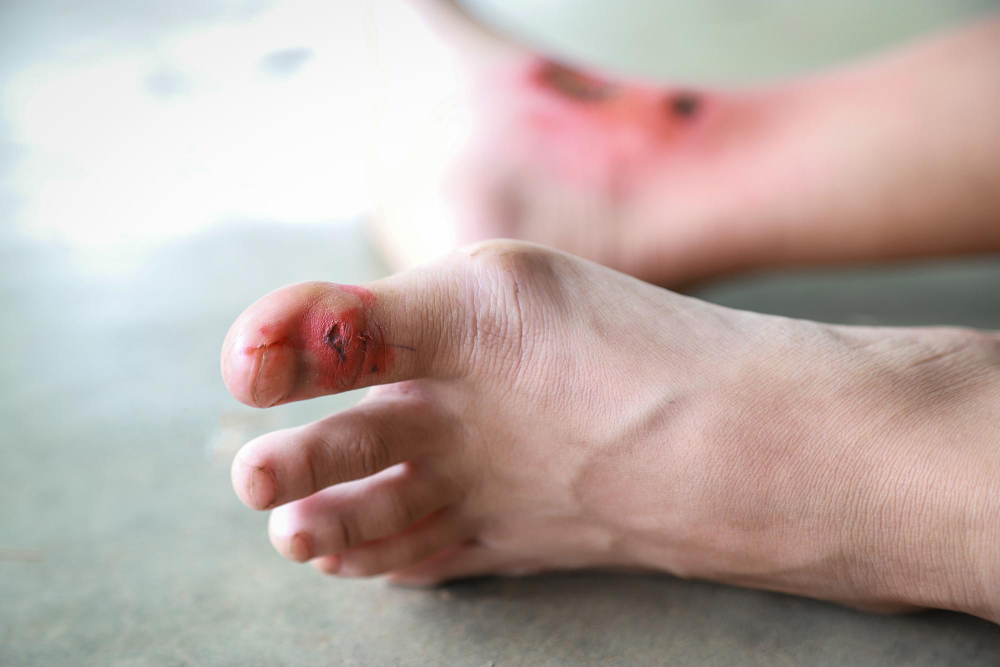
For people with diabetes, small foot injuries can quickly become serious. Since nerve damage makes it hard to feel pain, you might not notice a blister or cut. Meanwhile, poor blood flow slows healing. This gives infections a chance to grow. In some cases, a simple sore can turn into an ulcer or even lead to amputation. Therefore, it is very important to treat even minor injuries right away.
Common Causes of Foot Injuries in Diabetes
Many things can cause foot injuries in diabetic patients. Some common causes include:
Because nerve damage reduces feeling, you may not notice these injuries right away. As a result, small problems can become serious before you realize it.
Warning Signs: When a Small Injury Needs Urgent Attention
It is important to know when a small injury needs urgent care. Watch for these warning signs:
If you notice any of these signs, seek medical help right away. Early treatment can prevent serious complications.
Prevention Tips for Diabetic Foot Injuries
Taking care of your feet every day can help prevent injuries. Here are some simple tips:
Additionally, control your blood sugar as advised by your doctor. Good blood sugar control helps your body heal and lowers the risk of infection.
When to See a Doctor
If you have diabetes, do not ignore any foot injury. Even a small cut or blister can become serious. See a doctor if:
Early treatment can prevent serious problems. According to the CDC and the American Diabetes Association, regular foot checks are key to avoiding complications.
Conclusion
In summary, small foot injuries can become serious in diabetic patients due to nerve damage and poor blood flow. However, daily foot care and quick action can prevent most problems. If you have diabetes and notice any foot injury, consult a specialist Dr. Saliya Dharmayath at Citi Hospital for personalized care.